Index of working papers

Precautionary savings motive in a volatile economy: Evidence from Argentine Administrative Data
The precautionary saving hypothesis implies that consumers save to protect themselves against labour income volatility. Evidence on this mechanism in emerging economies is scant and is often limited to aggregate cross-country data. We study the effect of labour income uncertainty on saving using a long panel of individual-level salary data from Argentina. We extend a standard model of individual labour income to accommodate multiple sectors of the economy. Using this model and the salary data, we estimate labour income volatility across sectors. We then estimate its effect on savings using district-level data on bank deposits and a spatial dynamic panel model. We find that labour income volatility has a modest positive effect on savings. The spatial model indicates that most of this effect arises from spatial spillovers from nearby districts.
read more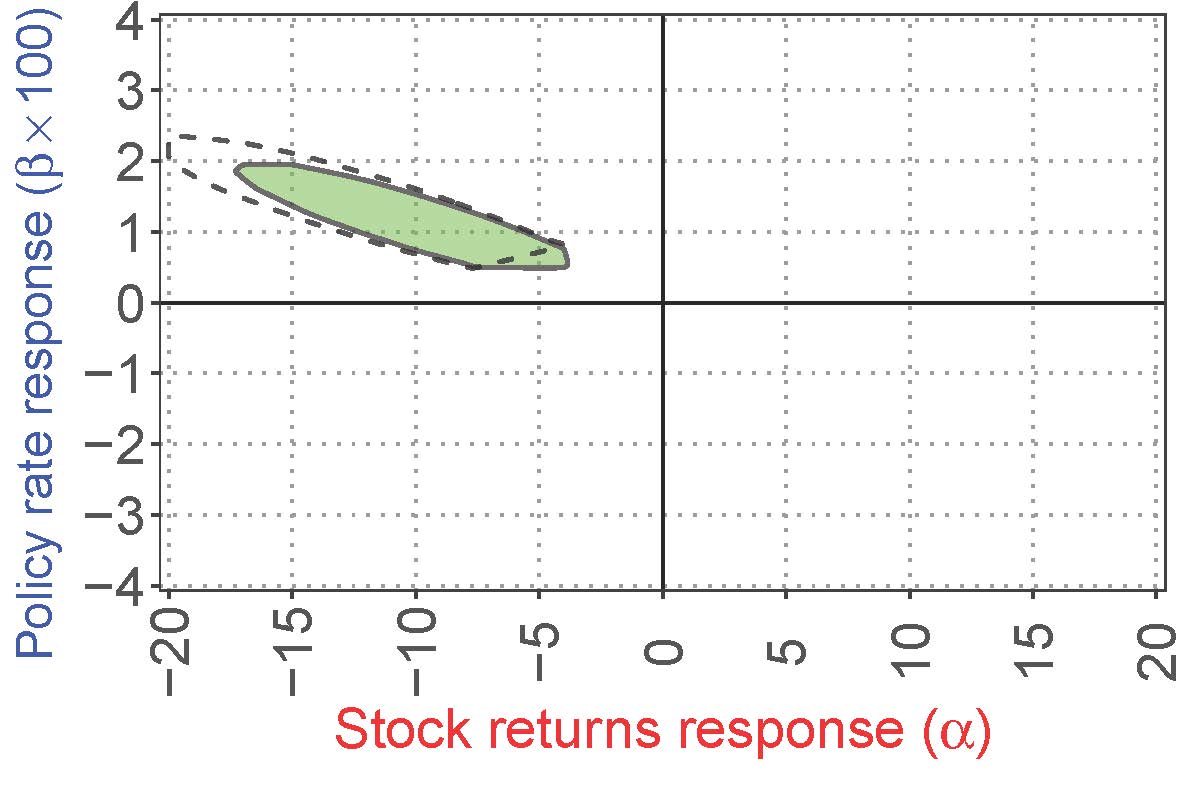
The (in)stability of stock returns and monetary policy interdependence in the US
We investigate the effects of monetary policy on equity returns and vice-versa in the US before, during and after the effective lower bound period (ELB) on interest rates. We use an inferential method in a (structural) VAR framework that exploits shifts in the volatility of shocks that affect equity returns and interest rates. Those shifts allow disentangling both effects without imposing restrictive assumptions previously used. We find dramatic changes in the relationship between monetary policy and equity returns over the period. Before the ELB period, policymakers reacted to increases in stock returns by raising the interest rate. This reaction becomes negative or muted since the ELB period. Regarding the stock market response to monetary policy, we find that a contractionary monetary policy that raises the policy rate decreases equity returns before the ELB period. Since then, however, we estimate that a rise in the policy rate increases returns, even after the ELB period. We show that this positive response of returns is driven by contractionary monetary policy lowering the expected equity premium.
read more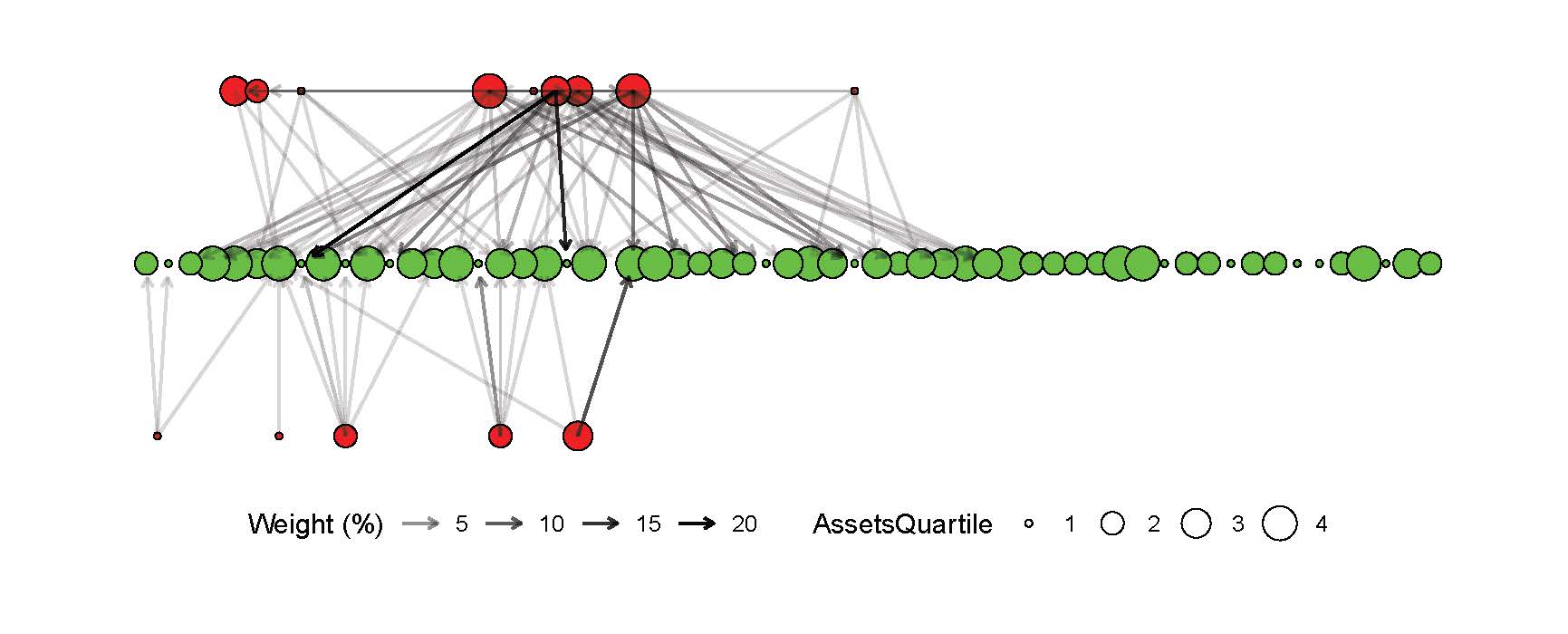
Contagion of bank failures through the interbank network in Argentina
Capital regulation on banks aims to reduce the probability of failures. In theory, the effect of capital buffers in preventing failures could depend on the linkages among financial institutions. These linkages are nevertheless usually omitted in empirical models. I study the effectiveness of capital regulation in preventing failures using a spatial autoregressive probit model, which accommodates links among banks and feedback effects. I study the Argentinian banking crisis of 2001 for which I build the complete interbank network. By allowing linkages between banks, estimates from the spatial model show that capital regulation is 50% less effective than estimates of a model in which banks are not interconnected.
read more